
If you have ever wondered why two silver bracelets that look similar can be priced worlds apart, the answer often lies in one confusing area. The words handmade and handcrafted are frequently used interchangeably, even though they describe very different processes, skill levels, and values.
Understanding these differences is not about judging one as good or bad. It is about clarity. When buyers understand how jewelry is made, pricing begins to make sense and expectations become more realistic.
This knowledge empowers you to buy with confidence rather than comparison.
In today’s market, handmade has become a marketing word rather than a technical description. Many brands use it loosely because it signals authenticity, care, and quality. Unfortunately, the lack of clear definitions creates confusion for buyers and unfair comparisons for artisans.
Not all jewelry described as handmade involves the same level of skill, time, or human input. Some processes rely heavily on machines with minimal hand involvement, while others depend entirely on the hands and decisions of a single maker.
To understand pricing and value, it helps to break these categories down honestly.
Mass produced jewelry is created through industrial manufacturing processes designed for scale, speed, and consistency.
Designs are finalized once and reproduced thousands of times. Molds are created, machines handle most of the production, and labor is divided into repetitive tasks. One person may polish, another may assemble, and another may quality check.
The advantages of mass production are clear:
The trade off is that individuality, adaptability, and craftsmanship depth are limited. Repairs are often not economical, and designs are easily discontinued when trends shift.
Mass produced jewelry serves a purpose. It provides accessibility and affordability. However, it operates under a completely different system from artisan jewelry.
Handcrafted jewelry typically sits between mass production and full artisan work.
In this category, machines are often used for major steps such as casting or cutting, while handwork is applied in finishing, assembly, or surface treatment. Production is usually done in small batches rather than thousands of units.
Handcrafted jewelry often involves:
This allows makers to maintain some control over quality while keeping prices relatively approachable. Handcrafted jewelry can be well made and durable, but it still relies on repeatability and efficiency.
For buyers, this category offers a balance between uniqueness and affordability.
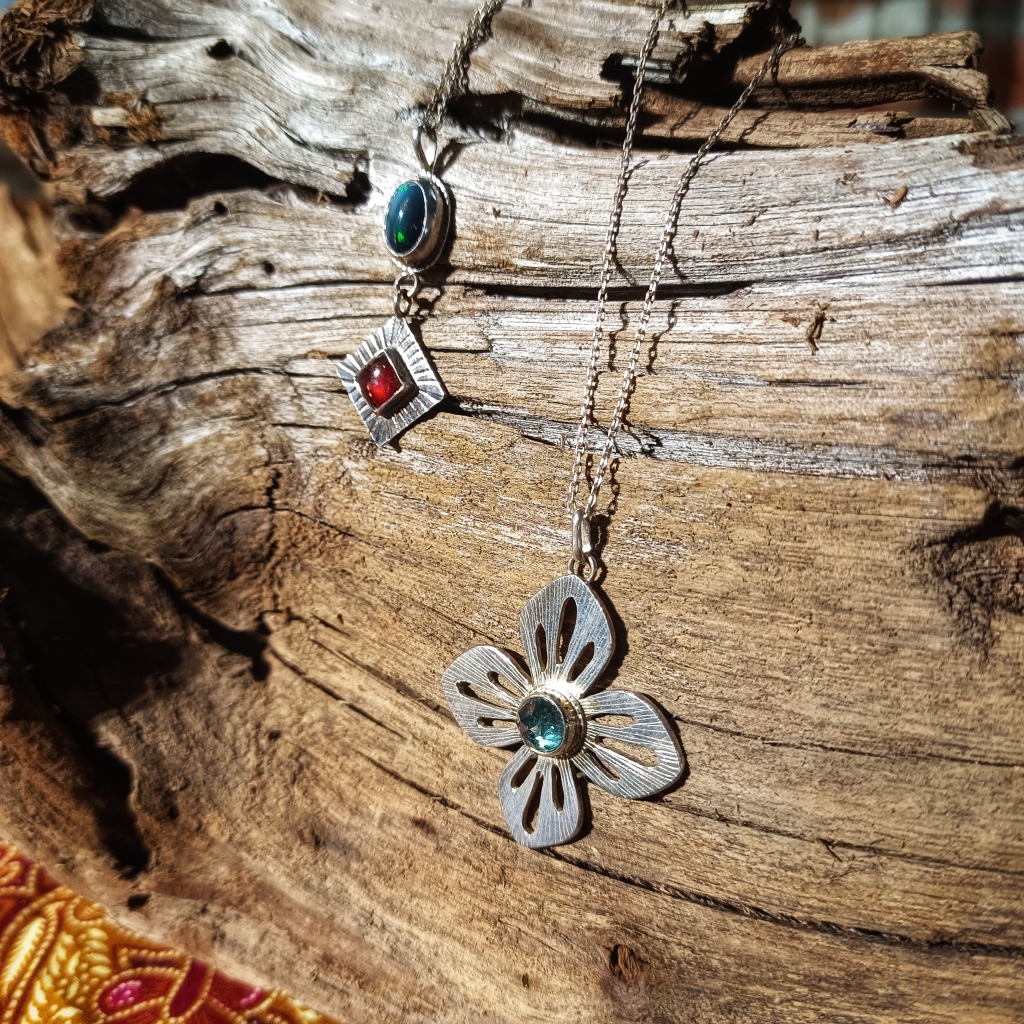
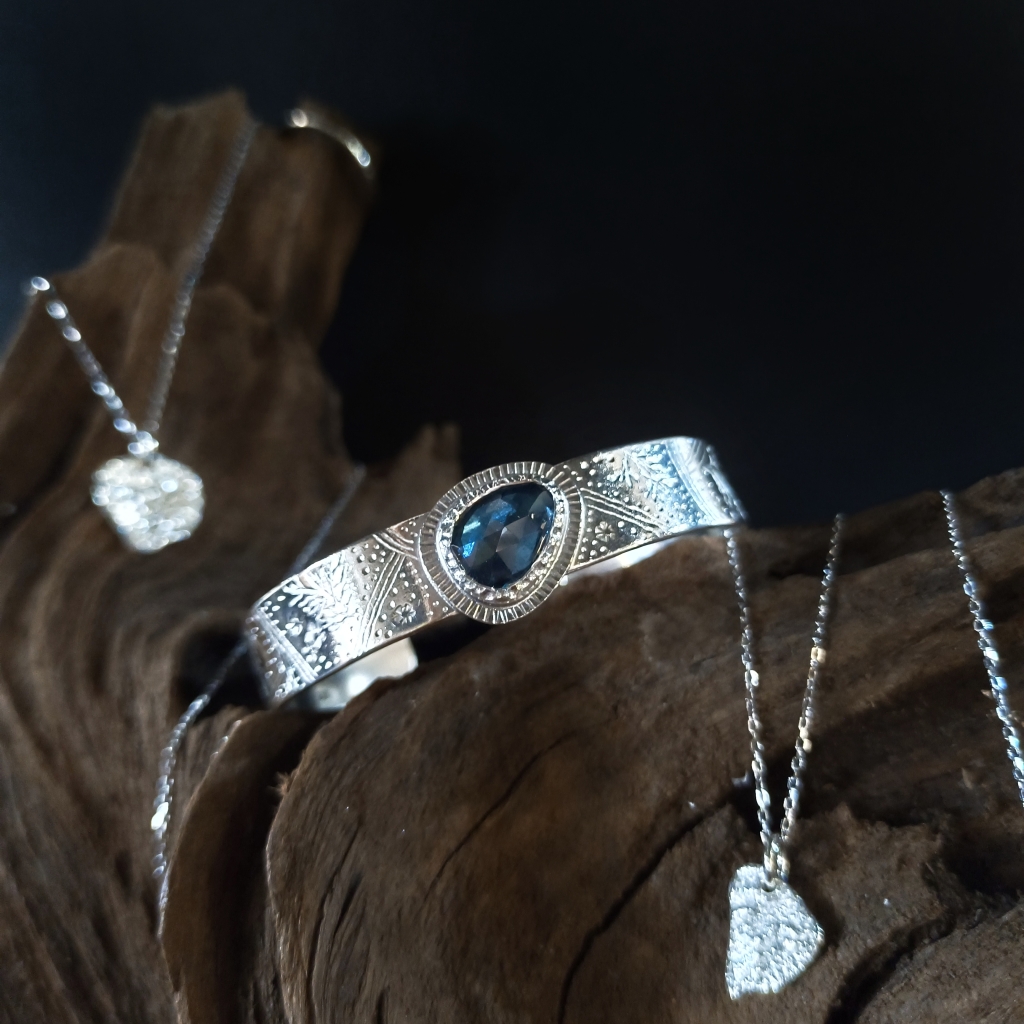
True handmade artisan jewelry involves hands on control from start to finish.
The artisan begins with raw material, often metal sheet or wire, and shapes, solders, textures, and finishes the piece manually. Every decision is made during the process, and outcomes cannot be fully predicted or replicated.
This level of work includes:
Even when two pieces follow the same design concept, they will never be identical. Slight variations are not flaws. They are evidence of human involvement.
This is also where risk lives. Mistakes mean starting over. Time investment is significant, and skill is developed over years, not weeks.
Pricing is not only about materials. It reflects time, skill, risk, and responsibility.
Mass produced jewelry spreads costs across thousands of units. Handcrafted jewelry balances efficiency with some hand labor. Artisan handmade jewelry absorbs all costs into each individual piece.
When you purchase artisan jewelry, you are paying for:
This is why true handmade jewelry cannot be priced the same way as factory produced pieces without compromising sustainability.
If you are unsure where a piece falls, asking the right questions helps.
Consider asking:
Artisans are usually happy to explain their process because it is central to their work.
Red flags often include vague descriptions, avoidance of process details, or claims of handmade paired with extremely low prices.
There is no single correct category of jewelry to buy. Each serves a different purpose.
Mass produced jewelry suits trend driven purchases and short term wear. Handcrafted jewelry offers improved quality with accessible pricing. Artisan handmade jewelry suits those who value longevity, story, and human touch.
The key is knowing what you are buying and why it costs what it does.
When expectations align with process, satisfaction follows.
Supporting artisans goes beyond a transaction. It is about sustaining skills that cannot be automated.
Three meaningful ways to support artisan businesses like mine:
When you support artisan jewelry, you are not just buying an object.
You are supporting skill, patience, and the continuation of human craftsmanship in a fast moving world.